
Signs of Mold in Your Home
The most common signs of mold in a home are a persistent musty smell, visible black or green spots on walls or ceilings, water stains, peeling paint, and unexplained allergy symptoms that improve when you leave the house. In Houston homes, mold often grows behind walls, under flooring, or inside HVAC systems for weeks before anyone notices. Here are the signs to look for — and what to do if you spot them.
Musty or Earthy Smell
A persistent musty odor is often the first sign of mold, especially in basements, crawl spaces, and bathrooms. If a room smells damp even when it looks dry, mold may be growing somewhere you can't see. In Houston's humidity, this is particularly common in homes with poor ventilation.
Visible Spots or Discoloration
Mold can appear as black, green, white, or gray spots on walls, ceilings, grout, or wood surfaces. Dark greenish-black patches could be black mold (Stachybotrys), which requires professional handling. It's sometimes mistaken for dirt or staining — or confused with mildew, which looks similar but is less serious (see our mold vs mildew comparison). If you see spots that seem to be spreading or that come back after cleaning, that's likely mold — not dirt.
Water Stains or Past Water Damage
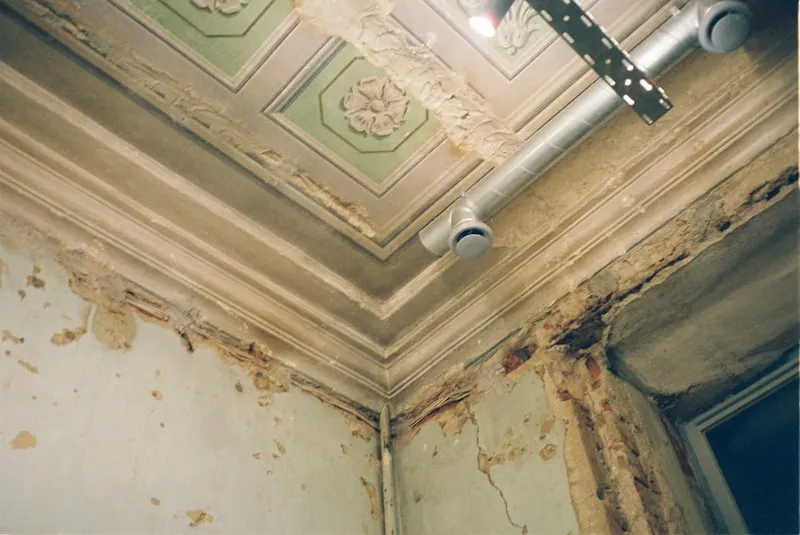
Water damage on a ceiling leading to mold growth — a common sign in Houston homes after storms or plumbing leaks.
Yellowish-brown stains on ceilings or walls usually mean water has been there. Even if the leak is fixed, mold can continue growing in the damp material behind the surface. Any area with past water damage should be checked for mold.
Peeling Paint or Bubbling Wallpaper
When moisture gets trapped behind paint or wallpaper, it creates ideal conditions for mold growth. If your paint is peeling, bubbling, or cracking — especially in bathrooms, kitchens, or near windows — moisture and mold may be the cause.
Health Symptoms
Sometimes your body notices mold before your eyes do. Common symptoms of mold exposure include:
- Sneezing, runny nose, or nasal congestion
- Itchy or watery eyes
- Coughing or wheezing
- Headaches or fatigue
- Skin irritation
If these symptoms improve when you leave the house and return when you come back, indoor mold is a likely culprit. Children, elderly family members, and anyone with asthma or allergies are more sensitive.
Condensation on Windows
Regular condensation on interior windows means humidity levels are high enough to support mold growth. In Houston, this is common during summer when air conditioning meets humid outdoor air. Check window frames, sills, and nearby walls for mold.
Where to Look in Houston Homes
Houston's heat and humidity mean mold can grow almost anywhere, but the most common locations are:
- Attics — poor ventilation traps heat and moisture, especially after roof leaks
- Bathrooms — especially around showers, tubs, and under sinks
- Behind drywall — near plumbing or exterior walls
- HVAC systems — condensation in ductwork and drip pans
- Under kitchen sinks — slow leaks go unnoticed for months
- Garages — flooding from heavy rains is common in Houston
When to Call a Professional
If you can see mold covering an area larger than about 10 square feet, smell mold but can't find it, or are experiencing health symptoms, it's time to get a professional inspection. A trained technician can identify the type and extent of mold, locate hidden growth, and determine the moisture source.
We offer free inspections in the Houston area — give us a calland we'll tell you what's going on. You can also read our mold remediation cost guide to understand what treatment typically costs, and our prevention guide to reduce the chance of mold returning. Renting? See our apartment mold guide for your rights as a Texas tenant.